
Demystifying auto insurance in Massachusetts: what every driver should know
If you live in the Bay State or plan to move here, the rules and realities of car coverage feel more complicated than a traffic circle in downtown Boston. This article walks through the law, the different types of protection, how insurers set prices, and practical steps you can take to lower your rate without sacrificing safety. I’ll also share some real-world examples from buying and using policies in Massachusetts so you get a sense of how this works in practice.
Insurance isn’t just a legal checkbox; it shapes how you recover after collisions, how your medical bills get paid, and what happens when someone else can’t pay you back. The goal here is not to overwhelm you with legalese but to give clear, usable guidance so you can shop, compare, and choose with confidence. Read on for specifics, checklists, and a few traps to watch for.
Throughout the piece I’ll use several synonyms—car insurance, auto coverage, vehicle insurance—to keep the text readable, and I’ll use the exact phrase auto insurance in massachusetts only sparingly. If you want a quick answer to a specific law or a price comparison for your ZIP code, I’ll point you to the right state resources and practical next steps.
Why Massachusetts insurance rules matter

Massachusetts has its own set of minimums and a no-fault approach that affects how claims are handled and which coverages you should prioritize. These rules influence premiums, policy design, and how medical payments are processed after an accident. Understanding the framework helps you avoid coverage gaps and surprises when you need protection the most.
Being familiar with the state requirements also makes shopping simpler because you can immediately eliminate policies that don’t meet legal minimums. That saves time and prevents accidental underinsurance, which can leave you personally responsible for large bills. Finally, knowing the rules helps when you talk to agents or insurers—questions will be sharper and more productive.
The basics: what Massachusetts requires
At a minimum, Massachusetts drivers must carry liability protection that meets the state’s legal limits and must have no-fault protections in place. The state’s system prioritizes covering medical costs and certain expenses quickly through personal injury protection rather than waiting for fault determinations. Those two facts—liability minimums and no-fault PIP—are at the heart of buying car coverage here.
Liability limits in Massachusetts are generally expressed using three numbers: the per-person bodily injury limit, the per-accident bodily injury limit, and the property damage limit. These minimums ensure that if you injure someone or damage property, there is at least a baseline of financial responsibility covered by your insurer. Below is a simple table to summarize the commonly cited minimum liability formula used in the state.
| Coverage type | Typical minimum |
|---|---|
| Bodily injury (per person) | $20,000 |
| Bodily injury (per accident) | $40,000 |
| Property damage | $5,000 |
Those figures are a commonly referenced baseline and are useful as a shorthand when comparing plans, but insurance language and required forms can vary. Massachusetts is also a no-fault state, which typically means drivers carry personal injury protection to cover medical costs and certain lost wages after an accident without needing to prove fault first. If you have specific legal questions about thresholds or mandatory forms, the Massachusetts Registry of Motor Vehicles and your insurer are the most reliable sources for precise, up-to-date requirements.
Optional coverages worth considering

Beyond legal minimums you’ll see a menu of optional coverages that protect you in different scenarios—collision and comprehensive coverage, uninsured/underinsured motorist protection, medical payments, rental reimbursement, and roadside assistance. Each line item serves a purpose: collision covers repairs to your car after a crash, while comprehensive handles non-collision losses like theft or hail damage. Choosing the right combination depends on your car’s value, finances, and risk tolerance.
Uninsured and underinsured motorist coverage is particularly valuable in Massachusetts where, despite mandatory insurance laws, people still drive uninsured. This protection steps in when the at-fault driver has insufficient or no liability coverage. Many drivers elect to keep uninsured motorist limits equal to their liability limits, which is a practical way to mirror the protection you carry for others.
Medical payments (MedPay) or enhanced PIP add-ons can fill gaps for co-pays, chiropractic care, or expenses not fully covered by health insurance. If you rely on the state’s no-fault system, consider how your health plan interacts with auto medical coverage to avoid duplicate premiums or uncovered out-of-pocket costs. Rental reimbursement and roadside services are small premiums for big convenience when your car is in the shop or quits on a highway shoulder.
How insurers calculate your rate

Insurance pricing might look mysterious, but it’s a blend of predictable factors and company-specific algorithms. Insurers weigh your driving history, age, location, vehicle type, credit-based insurance score (where allowed), claims history, and the coverages and limits you select. Each factor nudges your premium up or down, and two drivers with identical cars can face different prices because one lives in a higher-claim ZIP code or has a recent at-fault accident.
Location matters more than many people expect. Urban areas or places with higher theft or accident rates tend to have higher premiums. Your ZIP code captures local risk: traffic density, weather patterns, frequency of vandalism, and regional repair costs all play a role. That’s why someone moving from a low-traffic suburb into the city can see meaningful rate increases even with the same insurer.
A driver’s record is a primary lever. At-fault accidents, violations, and DUIs show up on insurance files and usually raise premiums, sometimes for several years. Conversely, safe-driving records, completion of defensive driving courses, and long stretches without claims often secure lower renewal rates or special discounts. If you change insurers, make sure your clean-driving history transfers correctly to avoid paying more than necessary.
Vehicle selection affects price too. Cars with high theft rates, expensive replacement parts, or poor safety ratings cost more to insure. Newer safety features like automatic emergency braking and lane-keep assist can earn discounts, while luxury models with high repair bills push premiums upward. When you’re car shopping, factor expected insurance cost into the total ownership picture.
Coverage choices and deductibles are straightforward levers you control. Higher liability limits increase your price, as do lower deductibles on collision and comprehensive coverages. Decide what you can afford in an accident and balance premiums against potential out-of-pocket risk. If your car is older and low in value, dropping collision and comprehensive may make financial sense; for a newer vehicle, those protections are typically worth the cost.
Finally, company underwriting rules and market positioning create variation between insurers. Two carriers can price the same driver very differently because one has better claims outcomes or uses different statistical models. That’s why shopping multiple quotes is essential—prices are not standardized across companies.
Discounts, bundling, and smart ways to save

Discounts can make a large difference in your annual cost and are worth seeking actively when you shop for coverage. Common discounts include multi-policy (bundling home or renters insurance), safe-driver, good student, multi-car, anti-theft devices, and low-mileage reductions. Ask insurers for every potential discount and confirm how they apply at renewal because some are conditional on sustained behavior or continued enrollment.
Bundling your auto and homeowners or renters policies is one of the simplest, often most reliable savings strategies. Many companies offer measurable discounts for package policies, and bundling reduces the administrative hassle of multiple insurers. That said, always compare bundled pricing with stand-alone quotes—sometimes a specialized auto insurer still offers a better deal even without a package discount.
Usage-based insurance and telematics programs are increasingly common and can reward safe driving. These programs monitor mileage, braking, speed, and time of day to tailor rates to your actual behavior. If you’re a cautious driver or have low annual miles, a telematics program might give you a meaningful reduction in premium.
Students and young drivers should check good-student discounts, driver-training credits, and opportunities to stay on a parent’s policy. For older drivers, some insurers provide discounts for completing a defensive driving course, while others may raise rates for age-related risk. The key is to ask specifically about demographic-targeted discounts when you get quotes.
How to shop and compare policies effectively
Start with a clear target: decide what limits and coverages you want before requesting quotes. Comparing apples to apples is far easier when you’ve already chosen liability targets, deductibles, and optional coverages. That prevents getting lured by low headline prices that omit critical protections you later regret.
Use at least three reputable carriers and one or two independent agents to get a mix of direct and brokered quotes. Independent agents can access multiple companies through one contact and sometimes uncover regional insurers not visible on national price comparison platforms. Don’t skip smaller mutual companies or regional players; they can be competitive and responsive on claims.
When comparing, look beyond the premium. Examine the company’s financial strength, customer service ratings, claims satisfaction, and local presence for repairs or rental arrangements. A slightly higher premium with a strong local claims track record can save time and stress after an accident. Websites that aggregate customer reviews and state insurance department complaint ratios are useful inputs here.
Always verify discount eligibility and whether the first-year price is introductory. Some carriers offer lower initial rates that increase on renewal if a discount expires or if their underwriting changes. Ask the agent for projected renewal pricing or typical renewal increase ranges so you’re not surprised when the second year’s bill arrives.
Get quotes using consistent inputs—same VIN, same driver list, identical coverage choices—so differences reflect company pricing rather than mismatched details. Keep notes on each quote’s reference number and the exact policy language for cancellation terms, as you might need that when switching carriers. If a quote seems unusually low, probe the agent: it may reflect omitted coverages or incorrect driver information.
In my own experience moving to Massachusetts, one carrier’s online quote was dramatically lower than others until I realized it omitted UM coverage and used a higher deductible than I wanted. Once I asked for three different scenarios with clear deductibles and UM limits, the price spread tightened and decision-making became easier. That moment reminded me to treat initial numbers as starting points, not final answers.
Filing a claim and what to expect after an accident

After an accident, quick and methodical steps make insurance claims smoother and more effective. Prioritize safety and medical needs first, then document the scene with photos and notes, exchange contact and insurance information, and report the incident to the police if required. The information you collect at the scene becomes the core of any claim file, so accuracy and thoroughness matter.
Next, notify your insurer promptly and provide the facts you’ve documented. They will open a claim number and guide you through the next steps: a claims adjuster may inspect the vehicle, determine repair scope, and work with shops or rental companies. Keep copies of all receipts and correspondence related to medical care, towing, or rental vehicles as these support reimbursement requests.
Be careful with recorded statements; insurers often request them early. It’s reasonable to provide factual information but avoid speculation, and ask clarifying questions about how the statement will be used. If fault is disputed, preserve evidence like photos, witness information, and any video from dash cams or nearby cameras.
If another driver is at fault, their liability coverage should handle your property damage and injuries once fault is established. In a no-fault state, your PIP benefits will often pay immediate medical expenses regardless of fault, with liability claims pursued separately. If the at-fault party lacks adequate insurance, your uninsured/underinsured coverage becomes an important source of recovery.
Practical steps after a collision: a checklist
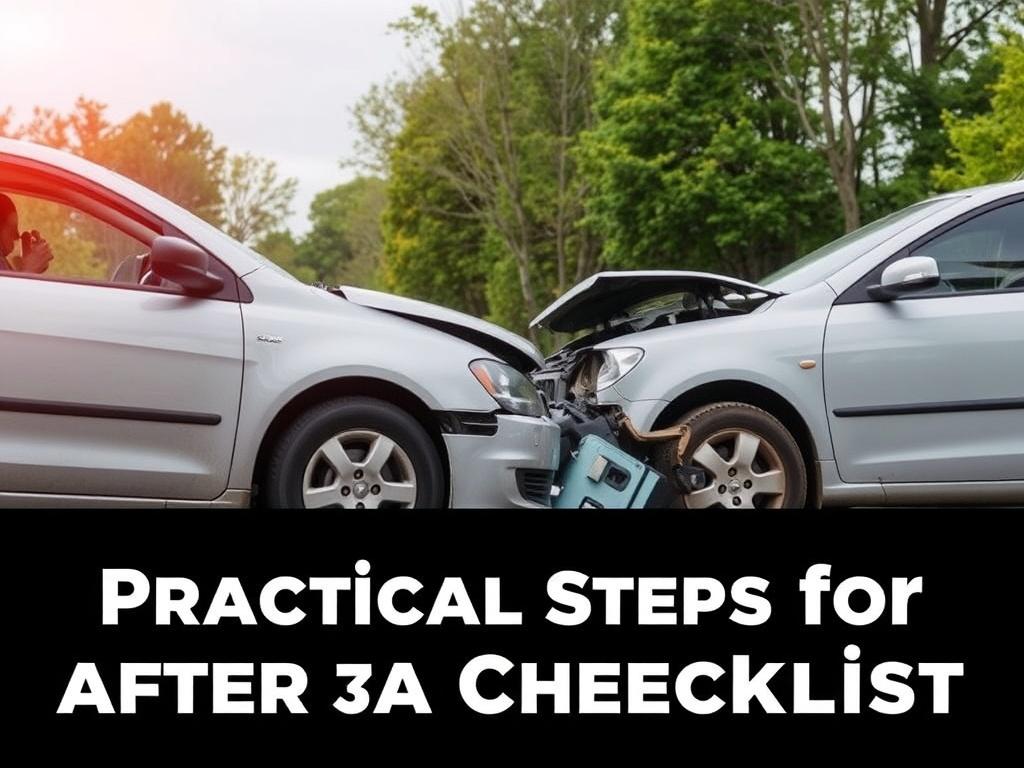
Having a brief checklist in your glovebox or phone can prevent missed steps after shock and stress. The following ordered actions cover safety, documentation, and claim preparation so you can move through the process deliberately. Keep this list handy for that inevitable stressful moment when clear thinking is hardest.
- Ensure everyone is safe; call 911 for injuries.
- Move vehicles if safe and legal; avoid leaving lane-blocking debris.
- Exchange driver, plate, and insurance details; get contact info for witnesses.
- Take photos of vehicles, damage, skid marks, and the broader scene.
- File a police report when required; get the officer’s name and report number.
- Notify your insurer and keep claim numbers and contact names.
- Save medical records, receipts, and rental invoices related to the crash.
That list reduces the chance of lost evidence or delayed benefits, both of which complicate recovery and can prolong disputes. A few minutes spent documenting right after an incident often pays off in smoother claims handling.
Handling disputes and repair disagreements

Repair shops and insurers sometimes disagree on what needs to be fixed or on who pays for certain parts. If you encounter a dispute, ask for a clear, itemized explanation from the adjuster and the shop and consider a second opinion from another reputable body shop. Most disagreements resolve when independent estimates are compared side-by-side with photos and documented damage histories.
If you believe your claim was undervalued or unfairly denied, escalate within the company and then consider external review. The Massachusetts Division of Insurance can guide formal complaint procedures, and a small claims court or a lawyer can help when there’s a substantial disagreement. Keep your documentation organized: timelines, photographs, and a log of calls and emails greatly strengthen any appeal.
Special situations: teens, seniors, rideshare drivers, and classic cars

Insuring a teen driver changes the pricing equation quickly because young age combined with inexperience is a strong risk factor. Adding a teen to a parent’s policy is often cheaper than a separate new policy, and maintaining good-student discounts and driver-training certificates can reduce the hit. Consider higher liability limits to protect household assets, since a serious claim involving a young driver can generate large judgments.
Seniors may encounter different concerns: some insurers charge more for age-related risk, while others provide discounts for anti-lock brakes, air bags, or completion of refresher driving courses. If driving becomes problematic due to health, work with family and medical professionals to plan transitions. Policy adjustments, like removing or adding named drivers, must reflect real household habits to keep coverage valid.
Rideshare and delivery drivers face coverage gaps if they use their personal vehicle for business purposes. Major companies often provide contingent coverage, but it may not activate for every stage of a ride or delivery, and limits may be lower than personal policy maximums. If you drive for a rideshare service, disclose that usage to your insurer and consider a commercial endorsement or a rideshare-specific add-on to ensure continuous protection.
Classic car owners have different priorities: agreed-value policies, limited mileage terms, and specialized repair networks can be worthwhile. Insuring a collector vehicle on a standard policy may underrepresent its value and exclude restoration costs. Seek a specialist if your vehicle is a significant collectible or has custom work; those insurers understand appraisal and restoration dynamics better than mass-market companies.
Uninsured and underinsured motorist coverage explained
Even in a state with mandatory insurance, some drivers remain uninsured or underinsured, and collisions with those drivers can be financially damaging. Uninsured motorist (UM) coverage pays for your medical bills and sometimes property damage when the at-fault party lacks coverage. Underinsured motorist (UIM) coverage fills gaps when the at-fault driver’s limits are too low to cover your losses fully.
Consider carrying UM/UIM limits equal to your liability limits for symmetry—this keeps your protection balanced. Some policies automatically include UM/UIM at minimum levels, while others require an explicit selection or waiver. Check your declarations page and ask your agent whether you have full UM/UIM protection and how it coordinates with your health insurance and PIP benefits.
SR-22s, suspensions, and license points
If you face a serious violation like a DUI or driving without insurance, you may need an SR-22 filing to restore driving privileges. An SR-22 is not insurance itself; it is a certificate your insurer files with the state confirming you have the required liability coverage. Not all insurers will file SR-22s, and those that do often charge higher rates because the policyholder is higher risk in the eyes of underwriters.
License suspensions for points or infractions affect premiums and policy eligibility. Insurers view suspensions as red flags and may refuse to renew policies, require higher premiums, or place the driver in a residual market where coverage is more expensive. If you’re dealing with suspensions, talk to agents who specialize in high-risk placements to understand options and timelines for returning to standard market coverage.
Practical tips for lowering your premium in Massachusetts
Start with the low-hanging fruit: raise deductibles on collision and comprehensive coverage if you can afford the out-of-pocket cost after a claim. Deductibles are a direct dial on your premium; increasing them reduces the insurer’s immediate exposure and usually lowers your annual cost. Be realistic about what you could pay if you had a claim—don’t set a deductible you couldn’t afford.
Drive fewer miles and ask about low-mileage discounts. If you work from home, carpool, or can switch to public transit a few days a week, insurers may reward lower annual mileage with a discount. Telematics programs similarly track usage and can translate conservative driving into savings without a formal mileage cutoff.
Keep a clean driving record and remedy minor violations through defensive driving courses when eligible. Some insurers offer direct discounts for completing these programs; others will consider your improved record at renewal. If you had a recent ticket, ask about timeframes when the surcharge will drop—many penalties diminish after a few years of safe driving.
Bundle policies, compare companies annually, and negotiate at renewal. If your carrier increases your rate, use current quotes to negotiate or switch. Loyalty has value, but blind renewal usually costs money over time; make a practice of checking the market every renewal cycle.
Finally, remove unnecessary drivers or cars from your policy and update your usage assumptions. If a household member no longer drives regularly or a second car is rarely used, adjust coverage accordingly. Small administrative updates like correcting an address or removing a permissive driver can produce measurable savings.
Common mistakes drivers make

One frequent error is buying the cheapest policy without confirming what it covers; a low premium can hide inadequate limits or missing protections. Another is failing to report changes—moving, adding a teen driver, or switching cars—all of which can void coverage if undisclosed. Treat your policy like an active financial document and update it promptly when circumstances change.
People also overlook coordination between health insurance and auto medical benefits, which can result in duplicate payments or uncovered co-pays. Understand how your health plan interacts with PIP or MedPay and keep receipts until claims are clearly resolved. Finally, assuming that a rental company or at-fault driver will cover everything is a risky mental shortcut; insurers and rental agreements have limits and exceptions that matter in practice.
Resources and where to go next
For definitive answers about mandatory forms and legal minimums, check the Massachusetts Registry of Motor Vehicles and the Massachusetts Division of Insurance websites. These state sources publish guidance, required forms, and contact information for consumer complaints. Insurer rating organizations like A.M. Best and consumer reporting sites provide additional context on company stability and customer satisfaction.
When you’re ready to act, gather the details: VINs for vehicles, driver information including dates of birth and driving histories, current policy documents, and any recent premium notices. Use that packet to get precise quotes, ask informed questions, and compare offer specifics rather than just headline prices. If you’d like, bring printed notes of the discounts you qualify for and any conflicting coverages you want clarified before signing.
My last piece of pragmatic advice: treat insurance as a conversation rather than a one-time purchase. Policies should evolve with your life—new jobs, moves, family additions, and vehicle upgrades all merit a quick insurance check-in. Regularly reviewing your coverage keeps costs in line with needs and ensures that when misfortune happens, you’re covered with no surprises.